Foraging and processing Chaga
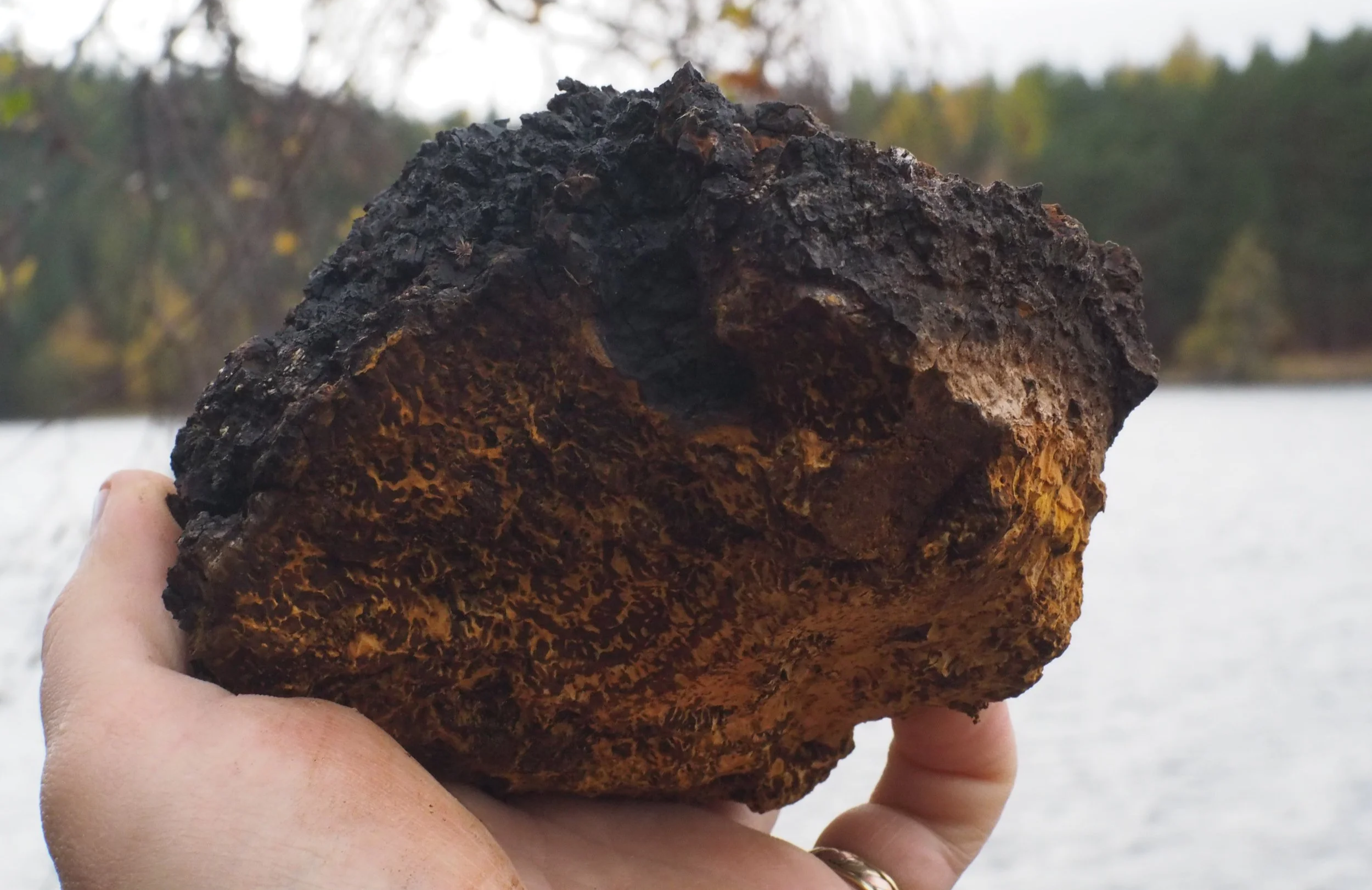
Foraging Chaga: addressing sustainability concerns
Sustainability concerns when foraging Chaga are likely driven by a few factors: firstly, it takes relatively long to grow, secondly its absence leaves a very obvious scar—few things we forage will show a permanent wound, signalling their absence for many years; thirdly and most importantly Chaga is very scarce in much of the UK.
The point on scarcity requires more attention: unless you live near the cairngorms, Chaga is scarce on these Isles and picking it is often discouraged. The key issue here is that concerns about over-harvesting need to be contextualised because for many species scarcity or abundance are geographically specific. Mass media, from foraging books to internet forums have contracted space and distorted perspectives, making it more common for people to misunderstand what is appropriate to forage or not in their local ecology because they’ve seen or heard of someone else picking or not picking something elsewhere.
Overzealous online attitudes about who should be picking what are also fuelled by a general moral panic about mushroom foraging, which has been shown to be rooted in xenophobic attitudes towards migrant communities with strong cultures of foraging fungi. Some online claims about over-harvesting Chaga conks also misunderstand the basic lifecycle of the fungus and wrongly assume the conk is a fruiting body and that harvesting it undermines its reproductive strategy, which is untrue.
Ultimately, picking all the Chaga conks in an area is bad craic and will deprive other people of access to it, but it has not been shown to significantly threaten the sustainability of the fungus.
Best practice when foraging fungi
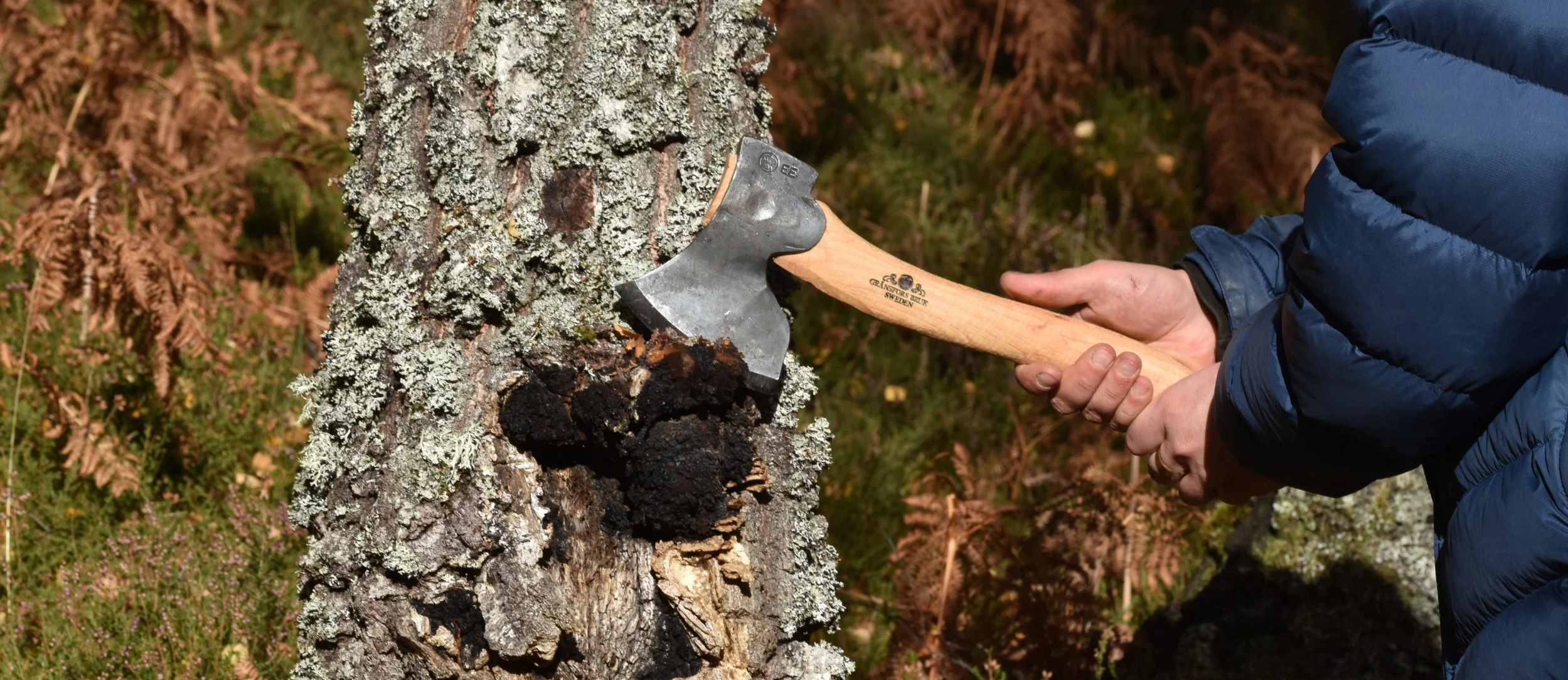
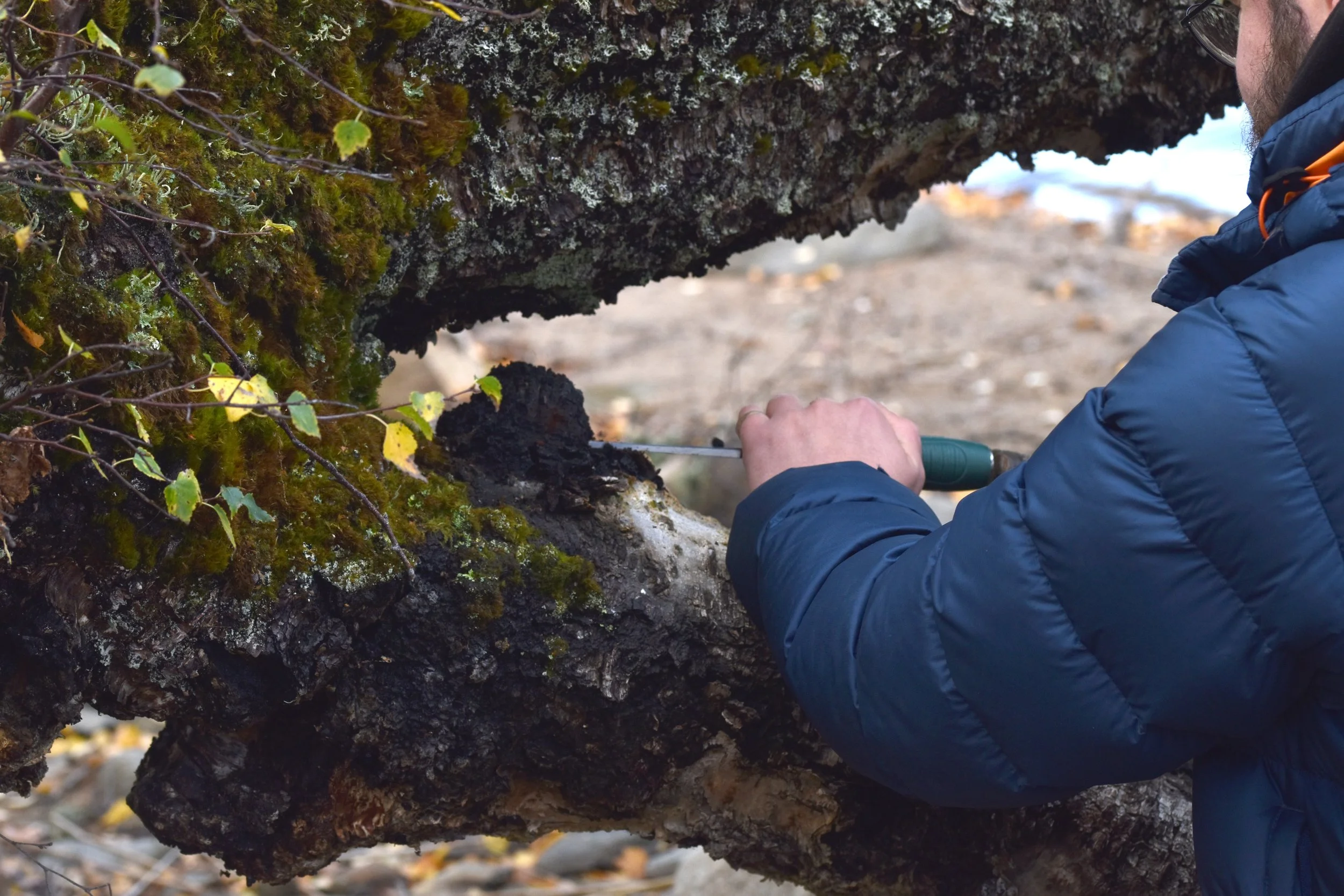
If you do plan to forage Chaga there are some basic guidelines that help make your practice more sustainable. Chaga conks being woody and hard need to be harvested using a small axe or a chisel and mallet. Striking the conk cleanly to avoid creating new wounds in the tree will reduce the chance of other fungal pathogens entering and accelerating tree death. There are also anecdotal reports that leaving behind a small piece of the conk increases the likelihood of conk regeneration.
Basic principles that apply to foraging all fungi also apply to Chaga: avoid harvesting small sclerotia; don’t take everything you find or see; take only what you need and will use; and consider your context and levels of local scarcity.
How to harvest Chaga safely
Harvesting Chaga conks half way up a tree with an axe obviously requires more care than picking mushrooms from the forest floor—wearing eye protection is also not a bad idea as the conks can be brittle and are often above head height meaning debris is likely to fall or fly towards your face as you strike—even small splinters can cause very serious damage to your eyeballs, and as a friend likes to often remind me, they don’t grow back.
How to process and use Chaga:
To store and preserve Chaga, large chunks or whole sclerotia removed from the tree need to be broken down further into smaller chunks, using an axe, chisel or knife. Chunks need to then be dehydrated, although they can seem woody and dry the conks are about 55% water and will go mouldy if not processed and stored in airtight containers. Dehydrating at lower temperatures of 40 °C is best if possible.
To use and brew Chaga you will want to break it down further into smaller chunks, or ideally grind chunks down into a powder in a coffee or spice grinder. The smaller the particle size, the higher the surface area, the more potent and efficient. Small chunks or powder should ideally be simmered for 30+ minutes to make a decoction, although a less potent quick tea can also be made using a cafetiere and a shorter steeping time. Small chunks can then be frozen and re-used several times until they lose potency. Therefore, according to the UK’s first (and only) trainer of mycotherapy practitioners, Fred Gillam, just 10g/month dried Chaga is enough for a maintenance dose.

If you have the means to, powdered Chaga can be processed into a double extracted alcohol-based tincture for maximum medicinal potency. Chaga’s deep rich flavour also makes it really fun to work with and it can also be used to make syrups, infuse glycerites, or added to chocolates, honey, kombucha and much more. However due to its ‘novel food status’ Chaga food products cannot be sold without a specific license, so to stay on the right side of regulations only extractions should be traded.