Our Worm Farm
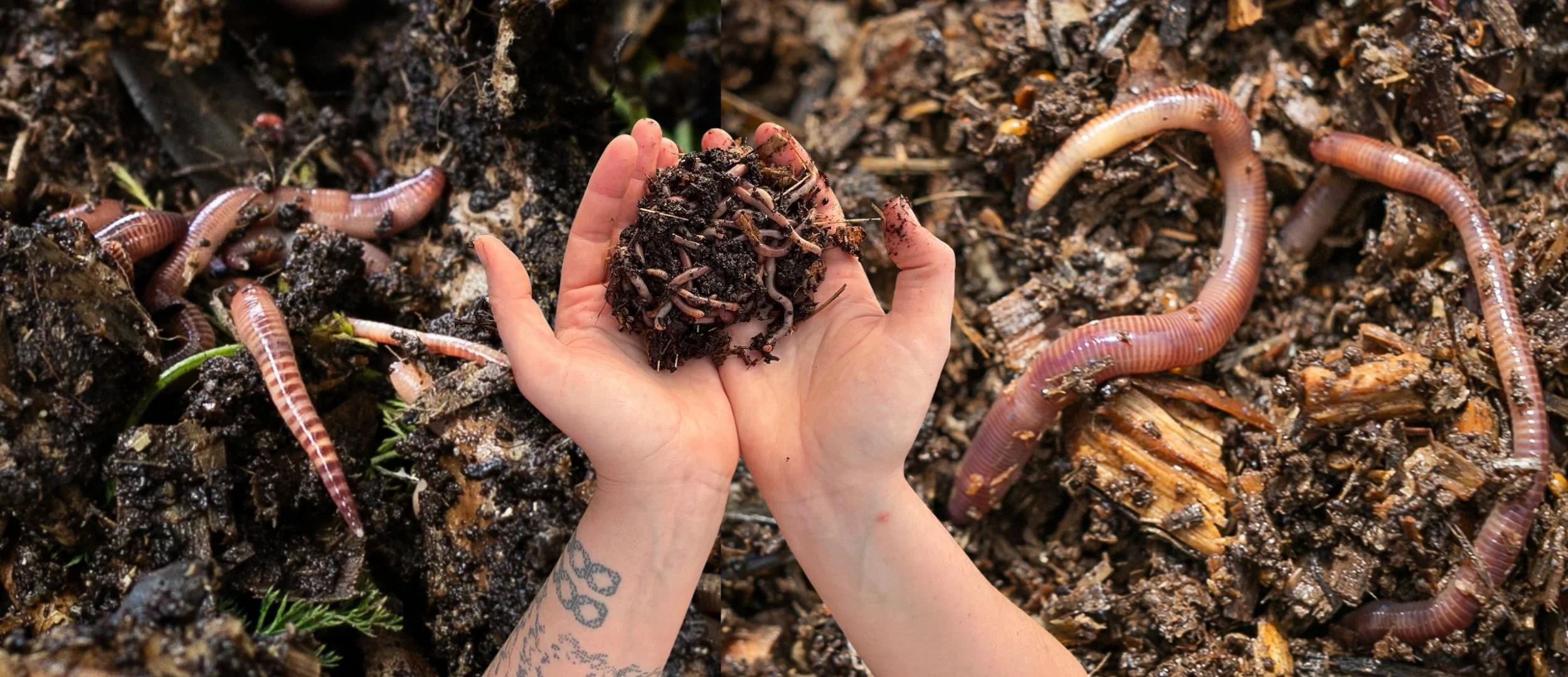
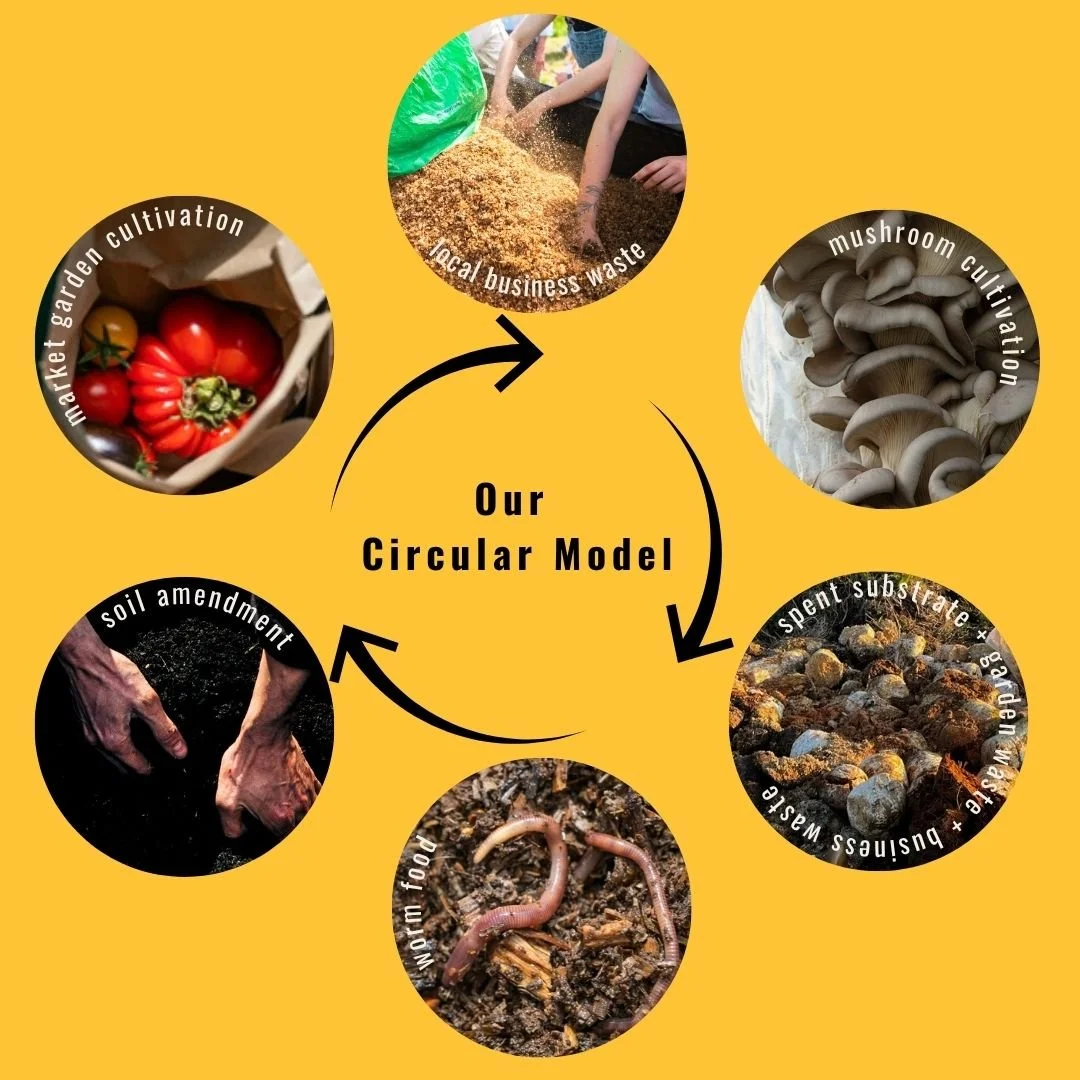
While our well-established mushroom cultivation project transforms local business waste into nutritious food, our fledgling vermicomposting enterprise will allow us to make good use of our mushroom farm waste.
Once our mushroom farm was up and running we ran into the question of what to do with our spent fruiting blocks. We realised that with the help of composting worms, the spent substrate used for growing mushrooms could be broken down into a nutrient-rich soil amendment perfect for vegetable propagation at Lauriston Farm.
In this way, our new project was born: through integrating worm farming with our mushroom cultivation work, we are furthering our commitment to circular models of food production.
While we have been worm farming at Rhyze since the beginning of 2024, thanks to Co-op Foundation’s Carbon Innovation Fund we are now able to significantly expand our worming operations. With their support over the next two years, and in collaboration with the growers at Edinburgh Agroecology Co-op (EAC), we will be conducting trials to investigate how worm castings added to potting media affect propagation.
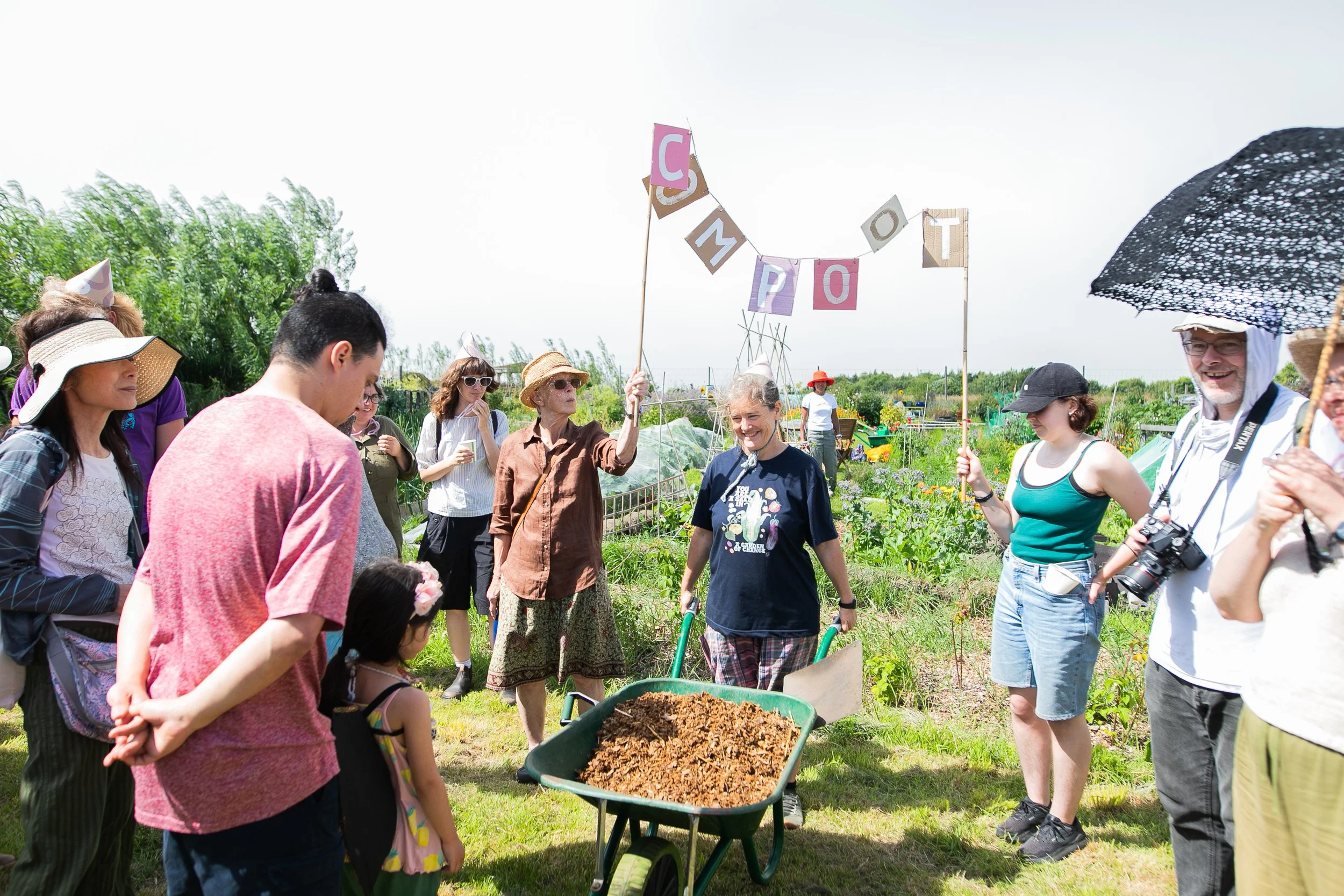
We will also be exploring whether we can increase the amount of local business waste that we transform on site, by introducing spent produce such as coffee grounds and brewers’ grains into our worm feed.
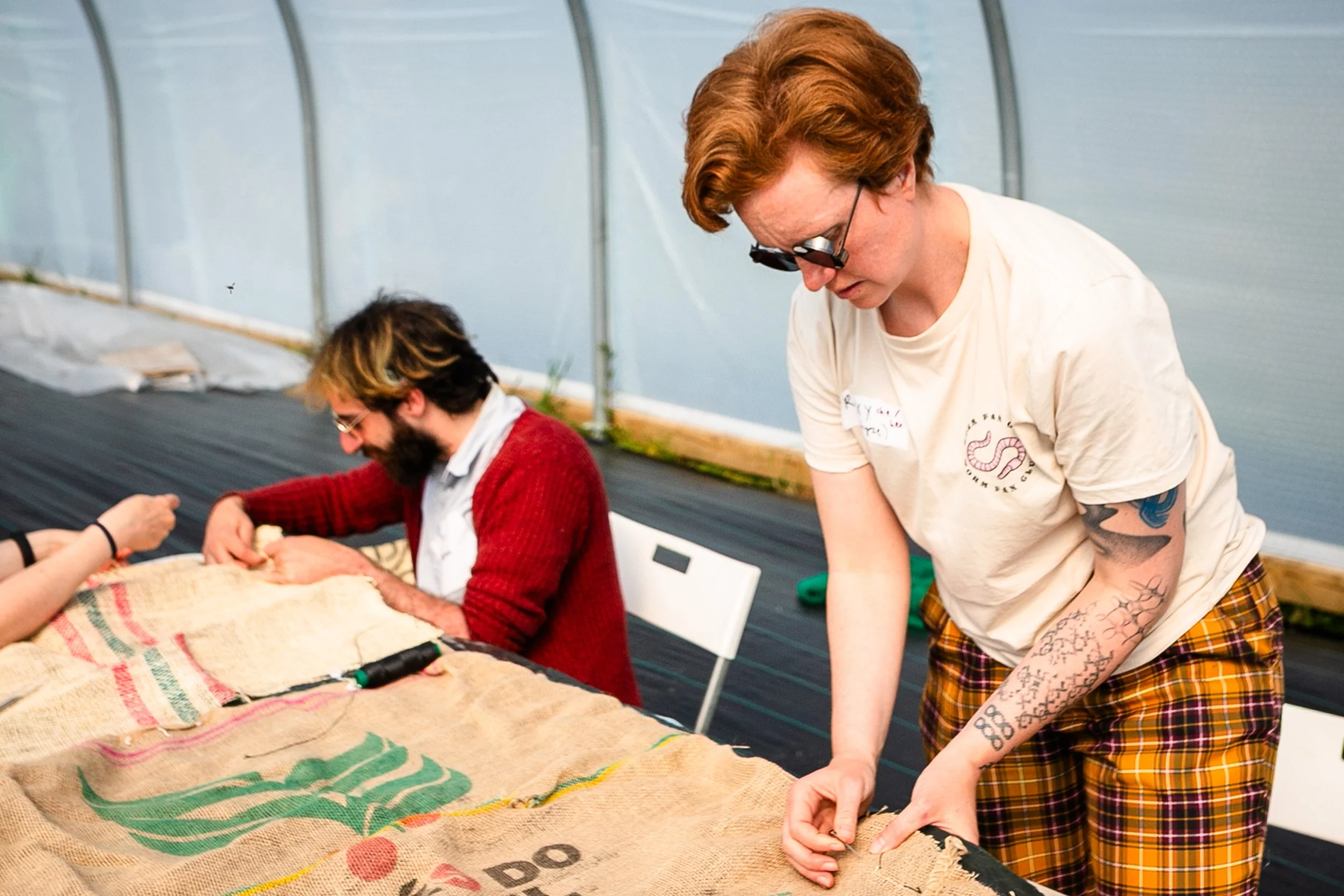
We are developing a commercial vermiculture system that produces high quality peat-free media from these waste inputs. By the end of 2026, we plan to be home to around a million composting worms. As the project progresses, we will be building their homes in the form of 24 Continuous Flow Through (CFT) bins, which will fill our brand-new 72 foot long polytunnel or ‘worm palace’.
We will have lots of opportunities for people to get involved at every stage, whether by learning to care for the worms, harvesting their castings, or learning what they like best to eat - so sign up to volunteer with us if you are keen to take part!