
our Mushroom farm
We built our first farm in a 40 foot shipping container that was located on a brownfield site in Fountainbridge. Our shipping container farm allowed us to occupy marginal space, be flexible and minimise costs while we build our project.
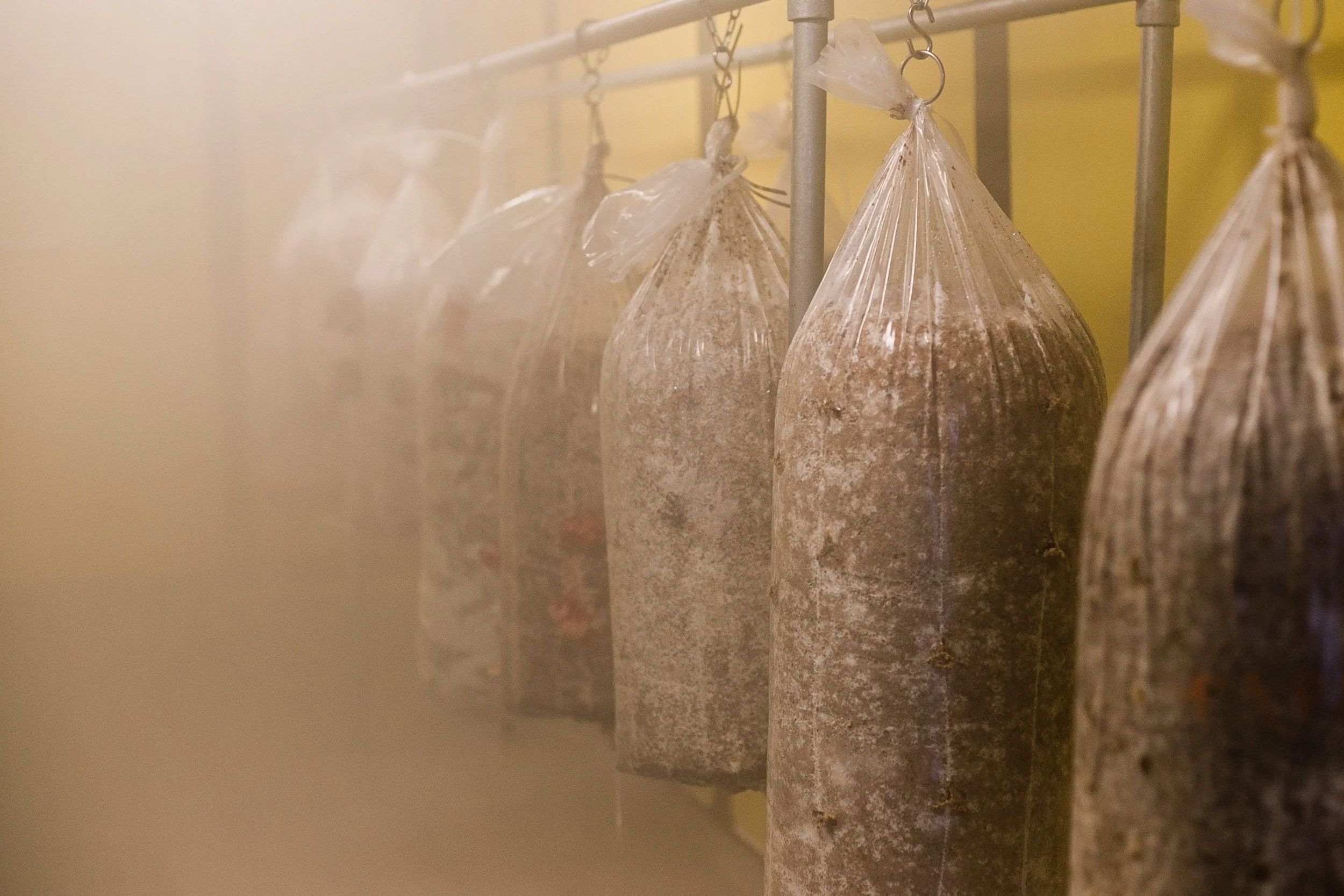
The shipping container is divided into a dark and well insulated space that we use for incubation, and a cool, damp and humid fruiting chamber. The fruiting chamber has natural light cycle of 12 hours to mimic the autumnal forest conditions mushrooms love to grow in. To achieve these conditions we had to build an insulated ‘wet room’ which could withstand the high humidity created by our high capacity humidifier. All the climatic controls are automated through a combination of timers and sensors.
Our facilities allow us to grow food all year. In a context of increasing climate volatility and high reliance on imports of fresh foods, it is vital to be able to produce healthy local food all year roud.
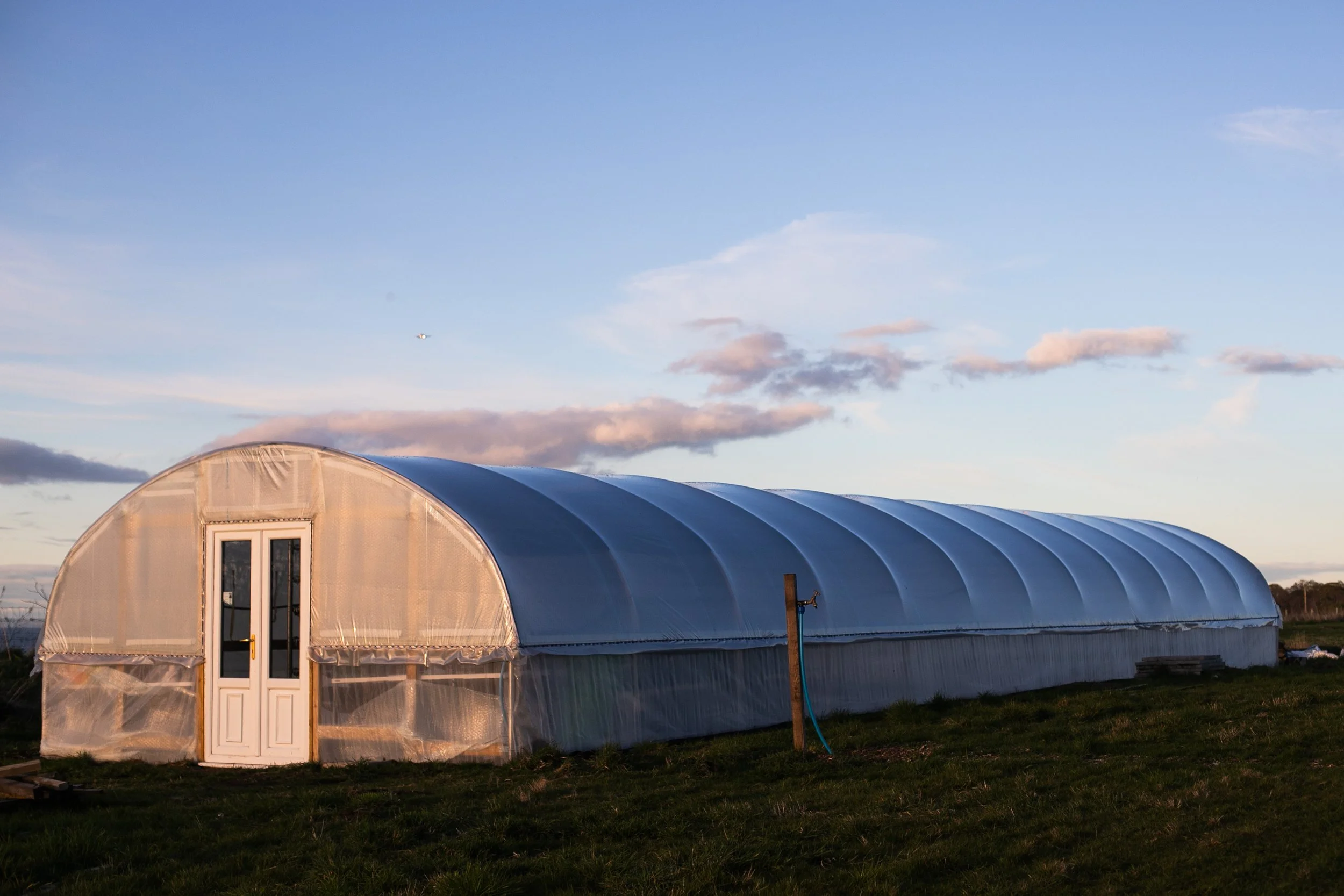
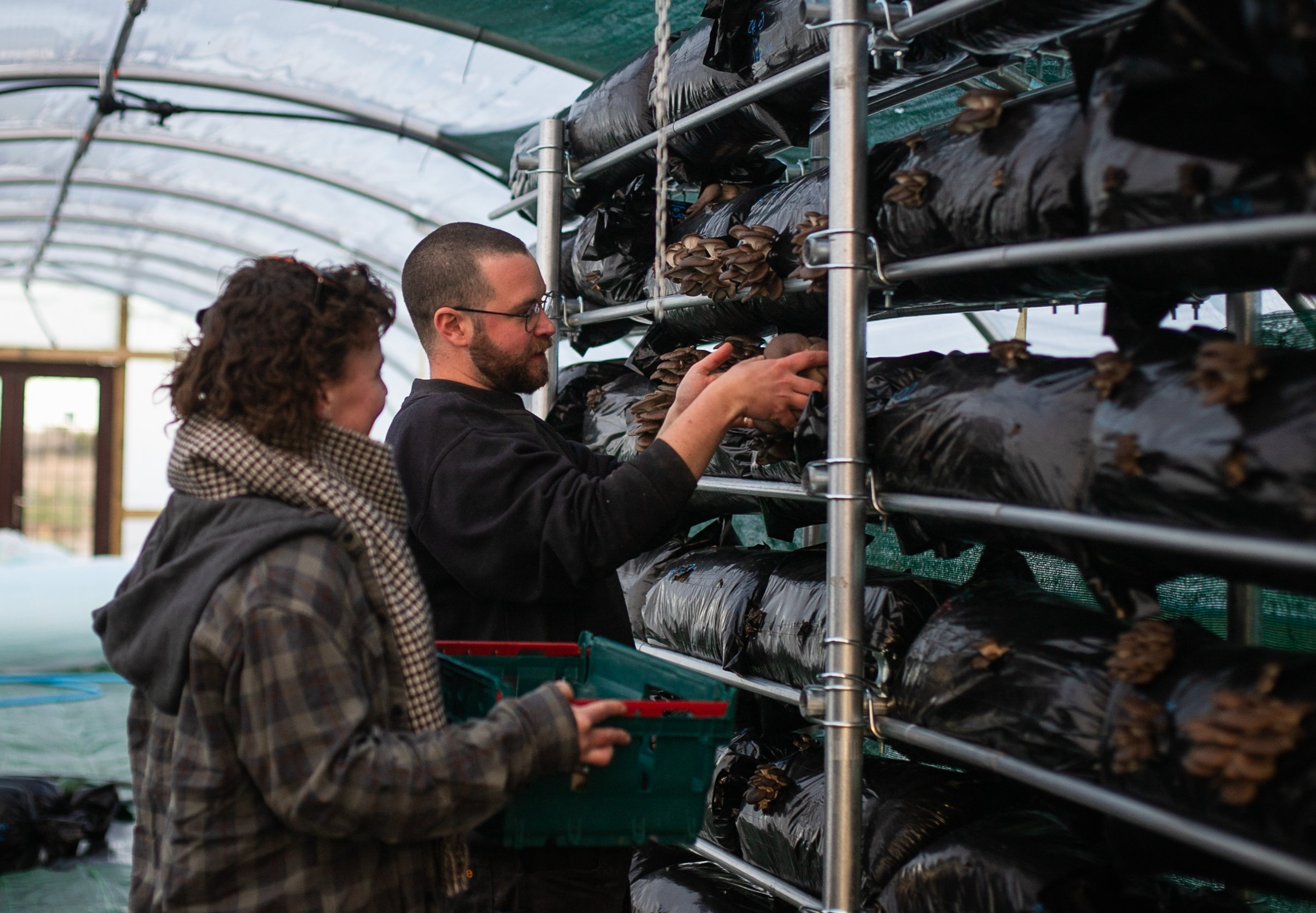
In the spring of 2024 we moved our infrastructure and operations to Lauriston Farm. The increase in our access to land allowed us to design and build a custom polytunnel that harnesses Scotland’s unique climate to create the optimal conditions for mushrooms to grow while further reducing the ecological footprint of our operations.
The polytunnel uses Scotland’s light cycle to our advantage, eliminating the need for electric lights and naturally enriching our mushrooms with vitamin D. Insulation and 360 degree adjustable ventilation helps us to regulate the temperature and means that we no longer need electric fans for airflow.
Our irrigation system uses a water pump that is controlled by a timer to boost humidity and is the only part of our farm that is reliant on electricity.
Not only is our polytunnel much greener than most conventional mushroom growing operations, but it is large enough to accommodate 8 times as many fruiting blocks meaning that at full capacity we can harvest between 600 - 800kg of Oyster mushrooms a month.
Growing on local business waste
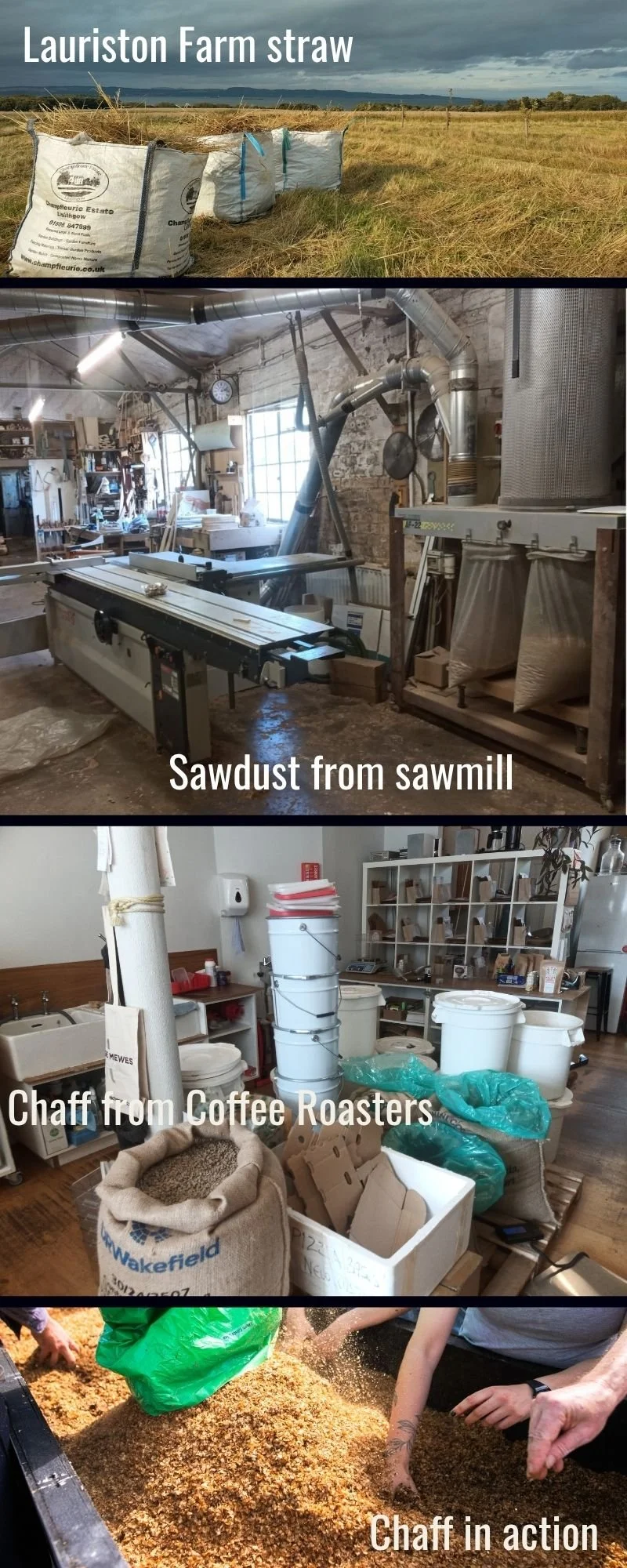
We are committed to growing our mushrooms from local business waste and by-products. This approach presents distinct challenges but also many opportunities to build relationships with other businesses who are keen to work towards more sustainable and cooperative ways of production.
The norm today is for mushroom farms to import processed (usually pelletised) substrate inputs like hardwood fuel pellets and soy hull pellets which makes growing mushrooms easier, more predictable and ultimately more profitable.
We’re choosing to do things differently because we want to demonstrate that it’s possible to grow mushrooms effectively using only local resources. In an increasingly unpredictable world we think it is crucial to develop production models that are resilient and localised.
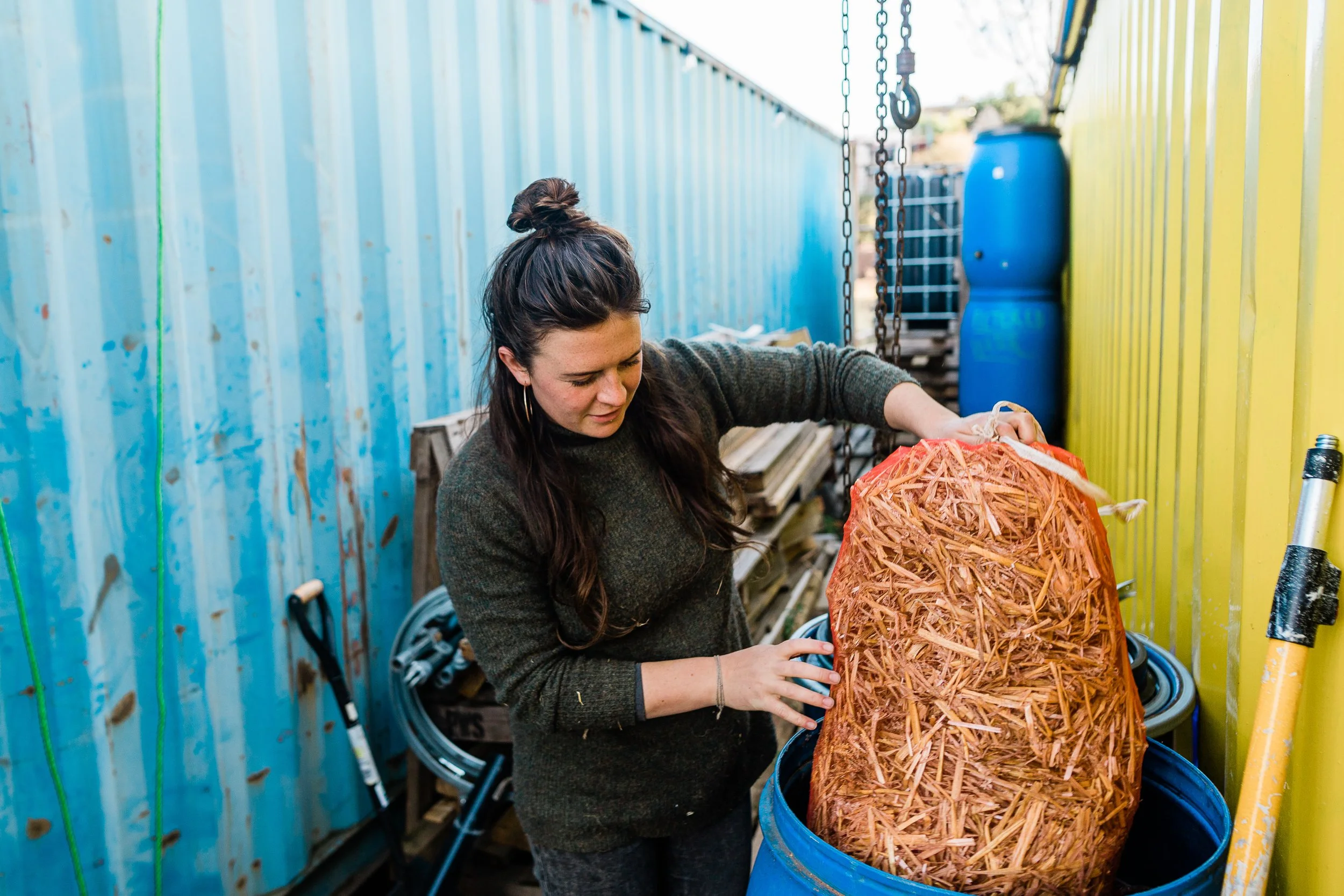
We grow our Oyster mushrooms on a mixture of sawdust, coffee chaff and straw.
Straw from the farm: Lauriston Farm grows a variety of grain crops. Following the grain harvest in 2024 we collected 5 cubic metres of straw from the fields and have been adding it to our substrate mix. As grain production scales up on the farm we hope to collect more straw, as well as waste from the milling of the grain.
Sawdust from mills and furniture makers: The bulk of our growing media is made up of sawdust and wood shavings collected from local sawmill and furniture makers who exclusively work with responsibly sourced local Scottish timber. All the mills and furniture makers we work with are part of the Association of Scottish Hardwood Millers (ASHS) or the Scottish Furniture Makers Association.
Coffee chaff from coffee roasters: Chaff is a by-product of coffee roasting and usually winds up in landfills where it emits methane. Chaff is high nutrient rich and is a vital source of nitrogen for our mushrooms. Many thanks to the roasters at Machina Espresso for providing us with a steady supply of chaff.
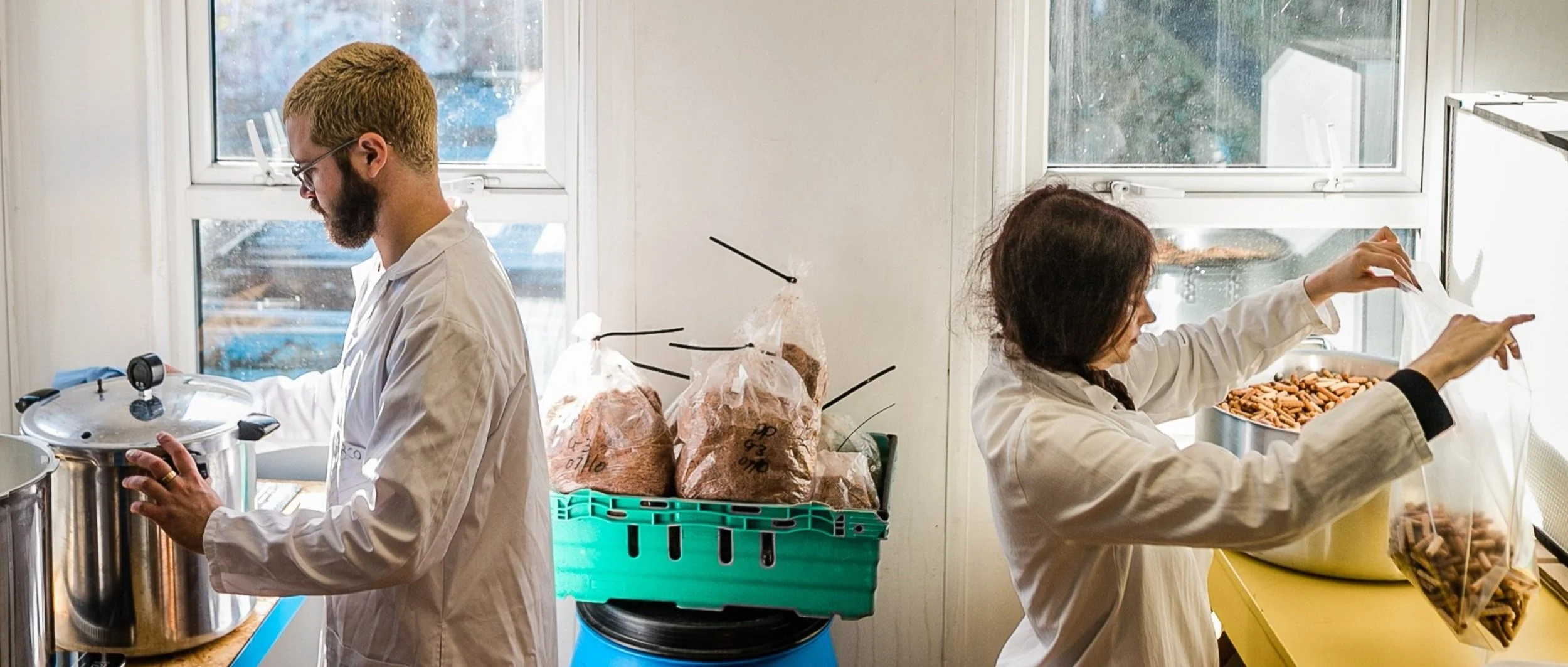
Our lab
Our lab is a key part of our mushroom growing operation. The lab is where we produce the spawn for mushroom cultivation. It’s akin to a plant nursery; it’s where we transfer mycelium in artificially safe and sterile environments until it’s reached a big healthy mass and can be used in the open.
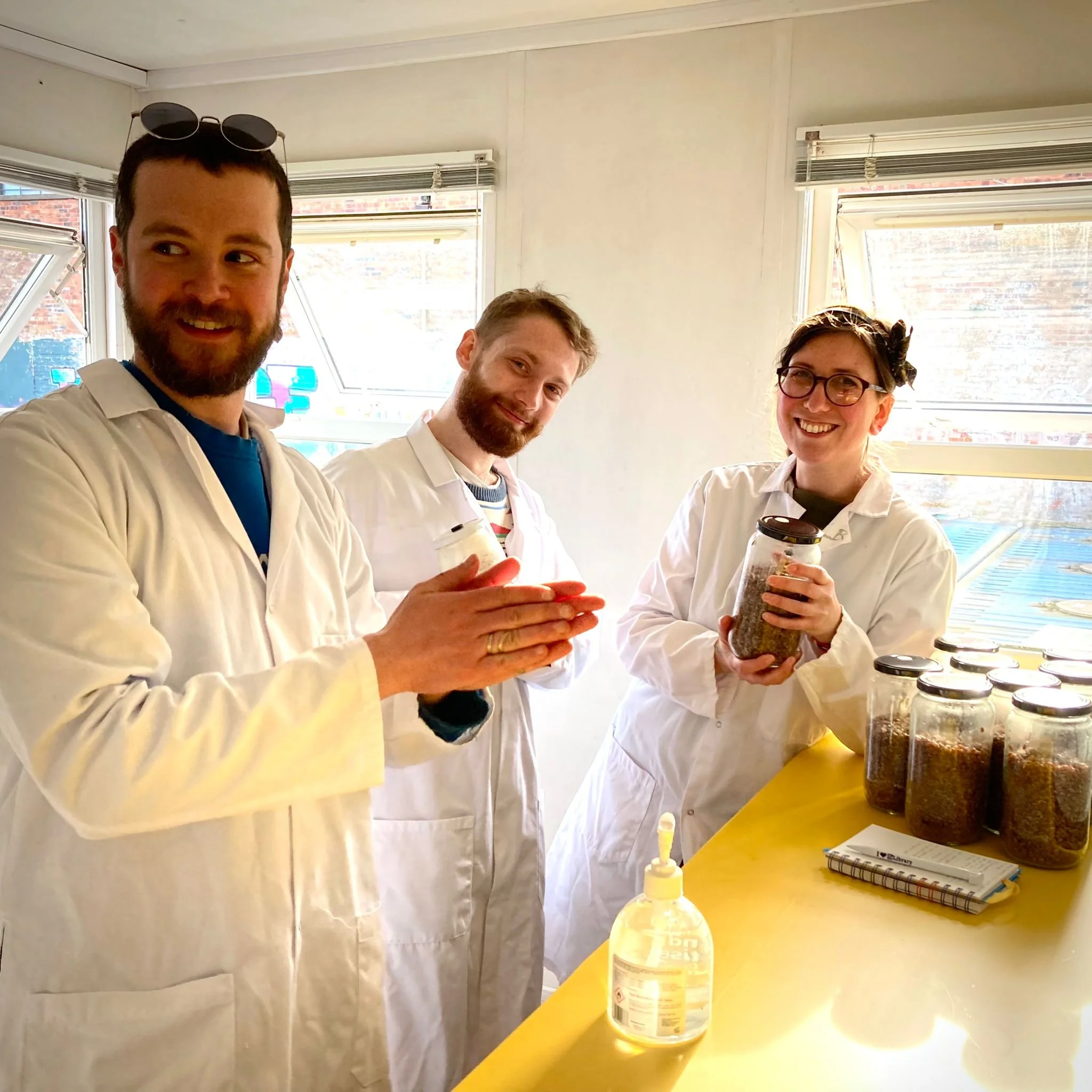
As well as producing varieties of spawn for our farm, workshops and local community, the lab is where we isolate strains of local fungi to move towards cultivating mushrooms with genetics best suited to our local environment.
We were incredibly lucky to have been supported by our local community in building the lab. In early 2021 we crowdfunded £8,600, most of which went to making our lab possible - thank you all again for your generous support!